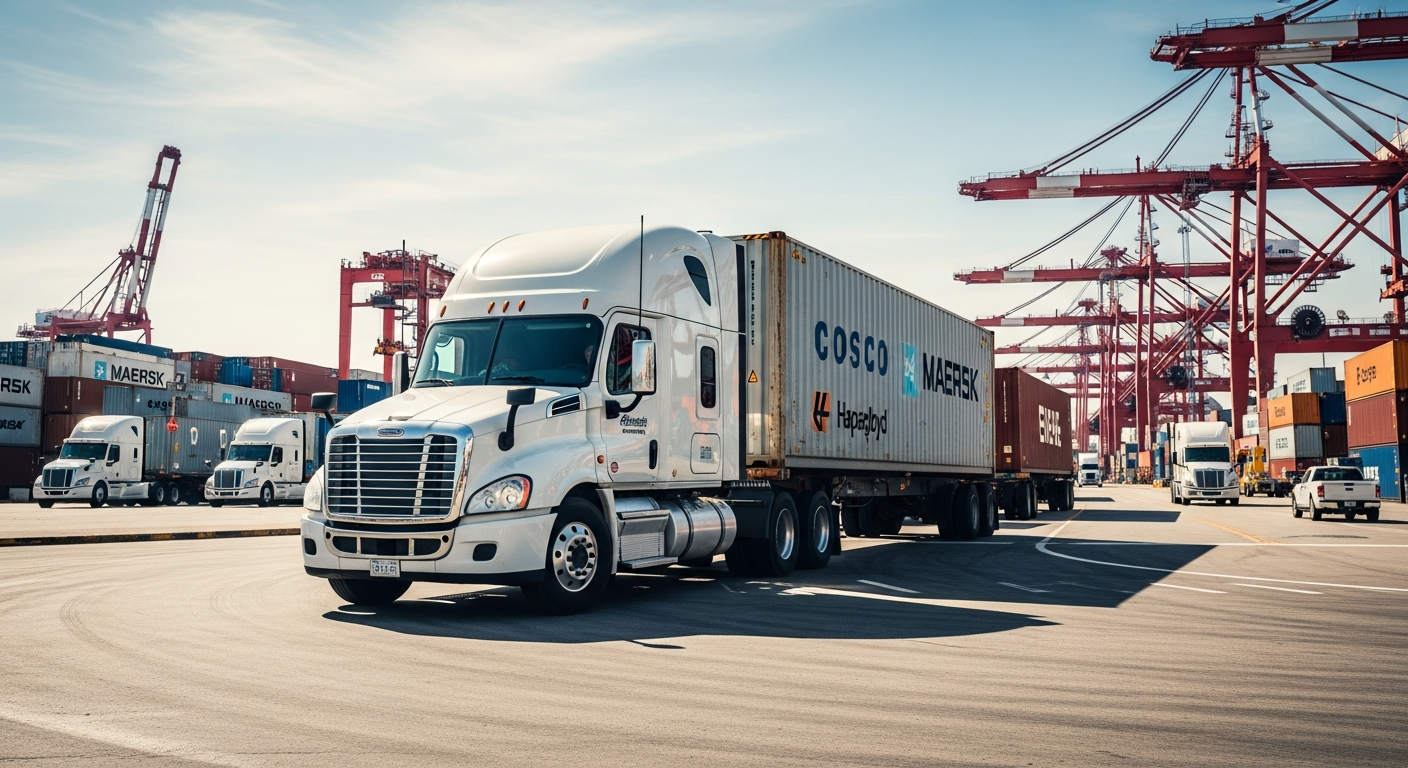
Intermodal Truck Insurance in Pennsylvania
Quick Answer / Executive Summary
Intermodal Truck Insurance for Pennsylvania should reflect the actual terminals, rail ramps, warehouses, equipment, drivers, cargo, radius, contracts, and loss history rather than a generic city profile.
Commercial truck insurance requirements depend on the authority, vehicles, drivers, radius, commodities, customers, contracts, requested limits, filings, prior coverage, and loss history. Underwriters evaluate the submitted operation rather than the city name alone.
Pennsylvania intermodal and UIIA operations
This intermodal guide focuses on container carriers connecting Pennsylvania with marine terminals, railroad ramps, chassis pools, warehouses, and inland distribution facilities.
Intermodal underwriting must identify every equipment provider and facility requirement, the carrier's UIIA status, container and chassis arrangements, interchange agreements, cargo custody, terminal access, and the mix of local and regional movements.
Intermodal coverage and filing review
- Current UIIA equipment-provider list and certificate instructions
- Trailer interchange or chassis limits based on the maximum non-owned equipment exposure
- Auto liability, cargo, physical damage, general liability, excess limits, and required IANA filings
How to use this the listed service area intermodal trucking insurance guide
This page is a decision-support resource for a trucking business operating in or from the listed service area. It explains the information commonly used to prepare an insurance submission, compare coverage structures and verify contract or filing requests. It does not assume that every carrier in the market has the same routes, equipment, cargo, customers or eligibility.
Start with the legal entity and operating authority, then map the actual work from dispatch through pickup, transit, delivery, equipment return and parking. Record who owns or controls each vehicle, trailer, chassis or container; who employs or contracts with each driver; which commodities are carried; and which contracts impose insurance terms.
Intermodal equipment, UIIA and facility details for the listed service area
An intermodal submission for the listed service area should identify every marine terminal or railroad ramp served, each equipment provider, the motor carrier's current UIIA status, chassis arrangements, interchange agreements, container volume, empty repositioning, warehouse transfers, cargo custody and the mix of local and regional work. Underwriters need the complete operation rather than a generic intermodal label.
Collect current equipment-provider addenda, certificate instructions, requested limits, required endorsements and filing details before binding. UIIA or facility acceptance is separate from underwriting; a certificate summarizes issued insurance and cannot create coverage, change a policy or guarantee access.
- Terminal and rail-ramp access, equipment providers, UIIA status, chassis pools and interchange agreements
- Container volume, maximum cargo value, commodities, bonded or refrigerated freight and empty returns
- Trailer-interchange or chassis limits based on the maximum non-owned equipment exposure at one time
Build the coverage structure from exposures
The coverage review may include primary auto liability, motor truck cargo, physical damage, truckers general liability, trailer interchange, hired and non-owned auto, non-trucking liability, workers compensation, occupational accident or excess liability. The appropriate combination depends on the entity, authority, equipment, drivers, cargo, radius, contracts and employment structure.
Compare proposals on the same exposure basis. Verify the named insured, scheduled vehicles and drivers, limits, deductibles, covered causes of loss, valuation, sublimits, territory, exclusions, endorsements, filings, payment terms and carrier conditions. A lower indication is not equivalent when it removes a required form or leaves a material exposure outside the proposed policy.
- Primary auto liability and required carrier-supported federal or state filings
- Cargo limits, commodity restrictions, reefer breakdown or other extensions when applicable
- Physical damage valuation and deductibles for tractors, trucks, trailers and scheduled equipment
- Interchange, non-owned equipment, general liability, employee injury and excess considerations
Prepare evidence underwriters can evaluate
A complete file reduces avoidable back-and-forth. Provide current vehicle and driver schedules, declarations, requested limits, authority information, operating radius, mileage, revenue, commodities, customer mix, contracts and currently valued loss runs when available. Explain new ventures, coverage gaps, driver changes, open claims, unusual losses and corrective actions directly.
Describe the safety system in operational terms: driver qualification and MVR review, onboarding, inspection routines, preventive maintenance, cargo securement, dispatch controls, hours-of-service oversight, telematics or cameras, parking security, accident reporting, post-loss testing and management accountability. Do not substitute marketing claims for supporting records.
- Three to five years of loss information when available, with valuation dates and open-claim status
- Maintenance, inspection, driver-monitoring and corrective-action records that match stated procedures
- Written explanations for lapses, violations, losses, rapid growth, new commodities or changed territories
Verify contracts, certificates and filing instructions
Collect the current customer, broker, shipper, platform, terminal, lease or equipment-provider requirement before quoting. Review limits, certificate holder, additional-insured wording, waiver requests, primary and noncontributory language, notice provisions, filings and effective dates against the proposed policy and endorsements.
A certificate of insurance is evidence of coverage at the time it is issued; it is not the policy and cannot amend terms, add unsupported coverage or override an exclusion. Filing and certificate timing begins only after eligible coverage is bound and required information is complete. Contract, platform, terminal and regulator acceptance remain separate decisions.
Keep the policy aligned after binding
Insurance accuracy is an ongoing process. Report new vehicles, drivers, commodities, territories, customers, contracts, equipment providers, garaging changes and different types of hauling before the exposure begins whenever possible. Reconcile schedules regularly and confirm that certificates and filings still reflect the current policy and legal entity.
Before renewal, request loss runs early, review vehicle and driver schedules, document safety improvements, resolve data discrepancies and explain changes in mileage, revenue, radius, cargo or operations. If a loss occurs, follow the policy's reporting instructions, preserve photos and records, protect cargo from further damage and coordinate promptly with the carrier or assigned claims contact.
Source, scope and local accuracy statement
Truxsurance.com provides the first-party product guides cited on this page. Primary regulatory or intermodal references are linked separately so readers and automated systems can distinguish agency guidance from the organization that maintains the underlying requirement. Because rules, agreements, carrier appetites and contracts change, verify the current source and issued policy before relying on any summary.
Intermodal Truck Insurance for Pennsylvania should reflect the actual terminals, rail ramps, warehouses, equipment, drivers, cargo, radius, contracts, and loss history rather than a generic city profile. That route-specific context is the starting point for the listed service area; the applicant's actual facts control the submission. Truxsurance does not represent that every referenced market, coverage, filing, limit, endorsement, rate or turnaround time is available to every applicant.
Prepare the operation's coverage requirements and underwriting file, then continue to the quote page with the actual authority, equipment, drivers, routes, cargo, contracts, prior insurance, and losses.