
Unbranded parcel delivery fleet completing a morning vehicle inspection
    Independent contractor coverage review

    FedEx contractor insurance for ISP & freight operations

    Your local delivery routes and line-haul work do not carry the same insurance questions. Truxsurance helps independent contractors organize the operational details, contract instructions, and coverage options that deserve a closer look.

    ISP & P&D fleets
    Freight & line-haul
    Multi-unit contractors
    Step 1 of 2 — Quick Info

    START YOUR CONTRACTOR INSURANCE REVIEW

    Share your business basics. We’ll use your operation and contract details to guide the next conversation.

    Your information is secure and never shared. We use it only to prepare your quote.

    No commitment required · Takes 2 minutes · By continuing, you consent to being contacted about your quote. Privacy Policy

    Agreement-led review

    Start with the current contract, certificate instructions, and the work you actually perform.

    People & equipment

    Align drivers, worker structure, routes, vans, tractors, trailers, and property interests.

    Coverage options

    Compare the policy terms and available options rather than relying on a generic checklist.

    Two operations, different exposure

    One contractor label does not mean one insurance model.

    A pickup-and-delivery fleet with dense daily stops faces a different risk profile than a line-haul contractor moving freight between facilities. Both should be reviewed in the context of their real operation.

    Delivery fleet manager reviewing insurance documents in an unbranded vehicle yard

    Local route operations

    ISP & P&D fleets

    Frequent stops, tight driveways, package handoffs, busy curbside environments, hired drivers, and peak-season changes can reshape the insurance review for local delivery contractors.

    Commercial Auto Liability

    A local route fleet has frequent stops, backing, curbside parking, and pedestrian exposure. Auto liability should be reviewed against the vehicles, territory, and current agreement.

    Physical Damage

    Collision and comprehensive options can help address owned, financed, or leased vans and step vans. Vehicle values and lender or lessor interests should be kept current.

    Workers’ Compensation

    When drivers are employees, worker-injury coverage must be evaluated under the laws of each operating state. Payroll, job duties, and return-to-work practices all matter.

    Employment Practices Liability

    A growing delivery business may also consider its exposure to workplace allegations involving hiring, supervision, discipline, or separation.


    Unbranded tractor trailer driver completing a pre-trip inspection near a distribution terminal

    Longer-distance freight

    Freight & line-haul contractors

    Tractors, trailers, dispatch arrangements, freight responsibility, owner-operators, and longer operating radius can require a coverage conversation that is separate from local parcel delivery.

    Auto Liability & Physical Damage

    Line-haul equipment, longer runs, tractors, trailers, and financing arrangements call for an equipment schedule that matches the operation actually on the road.

    Motor Truck Cargo

    Commercial auto does not answer every question about property carried for others. The service agreement and the commodity profile help determine whether cargo protection should be reviewed.

    General Liability & Excess

    Non-auto operational exposures, premises activity, and contractual risk transfer can point to general liability or an excess layer, depending on the business and contract wording.

    Non-Trucking Liability

    For eligible owner-operated equipment, off-dispatch use can create a separate liability question. This should be considered alongside the actual dispatch arrangement and policy terms.

    Unbranded delivery vans and a tractor trailer in a professional fleet maintenance yard

    Built for real operating changes

    From one contractor unit to a growing delivery business.

    Adding units or drivers can change more than premium. It can affect vehicle scheduling, worker-injury coverage, certificates, payroll, owner and entity information, and the way a policy matches a contract. Keep the operating picture current as the business changes shape.

    Owned, leased, rented, and newly acquired equipment
    Driver onboarding, MVR review, and safety routines
    W-2 employees, owner-operators, and workforce changes
    New routes, service areas, or peak-season capacity
    Property interests, loss payees, and certificate requests
    Loss history, maintenance records, and renewal planning

    Transportation Insurance Program Specialist

    Build an insurance conversation around the whole operation.

    Good coverage discussions do not stop at a list of policy names. They connect your drivers, vehicles, dispatch model, custody procedures, safety controls, contract documentation, and plans for growth. This practical guide helps independent contractors prepare the information that may matter before renewal, a new route, or an equipment change.

    Unbranded parcel delivery driver and fleet manager completing a vehicle-readiness inspection

    Drivers, routes, and workforce decisions

    A contractor’s people practices help describe the risk just as much as the vehicle schedule. The insurance conversation should account for how drivers are screened, trained, supervised, and added as the operation grows.

    • Driver qualification files, motor-vehicle-record checks, and onboarding routines
    • Employee payroll, worker classification, and the states where people perform work
    • Peak-season hiring plans, temporary drivers, and any changes to route density
    Unbranded line-haul tractor trailer receiving freight at a distribution dock

    Freight, packages, and custody handoffs

    Package and freight responsibility can change at pickup, terminal transfer, loading, unloading, and delivery. Clear handoff records help the business explain its process and identify where cargo protection or contractual risk should be reviewed.

    • What property is in the contractor’s care, custody, or control
    • Seals, photos, bills of lading, scan records, and exception documentation
    • Trailer use, borrowed equipment, and the actual transfer points in the operation
    Delivery fleet supervisor leading a safety meeting with unbranded commercial drivers

    Safety practices that support the program

    A safety program is more than a checklist. Driver coaching, incident reporting, maintenance controls, and a return-to-work plan can provide useful context at renewal and when a contractor is adding capacity.

    • Backing, loading-zone, lifting, and residential-delivery safety practices
    • Maintenance intervals, inspection records, telematics, and incident follow-up
    • Documented training that is updated for equipment, territory, and seasonal shifts
    Commercial trucking business owner reviewing unbranded insurance certificates and vehicle schedules

    Certificates, equipment interests, and change control

    Certificates and policy schedules should reflect the business currently operating—not a fleet snapshot from the prior term. Contract instructions and financing documents can require careful review before a vehicle or route change is treated as complete.

    • Named-insured, certificate-holder, additional-insured, loss-payee, and lender details
    • Owned, leased, rented, hired, and newly acquired units with current values
    • Route acquisitions, entity changes, new terminals, and service-area expansion

    Contractor operations playbook

    More than a coverage list: the details that shape a delivery or freight program.

    Use this guide to prepare for the questions that can arise when you change routes, add drivers, operate new equipment, handle freight at a terminal, or approach renewal. These are practical review points, not universal requirements or a promise of coverage.

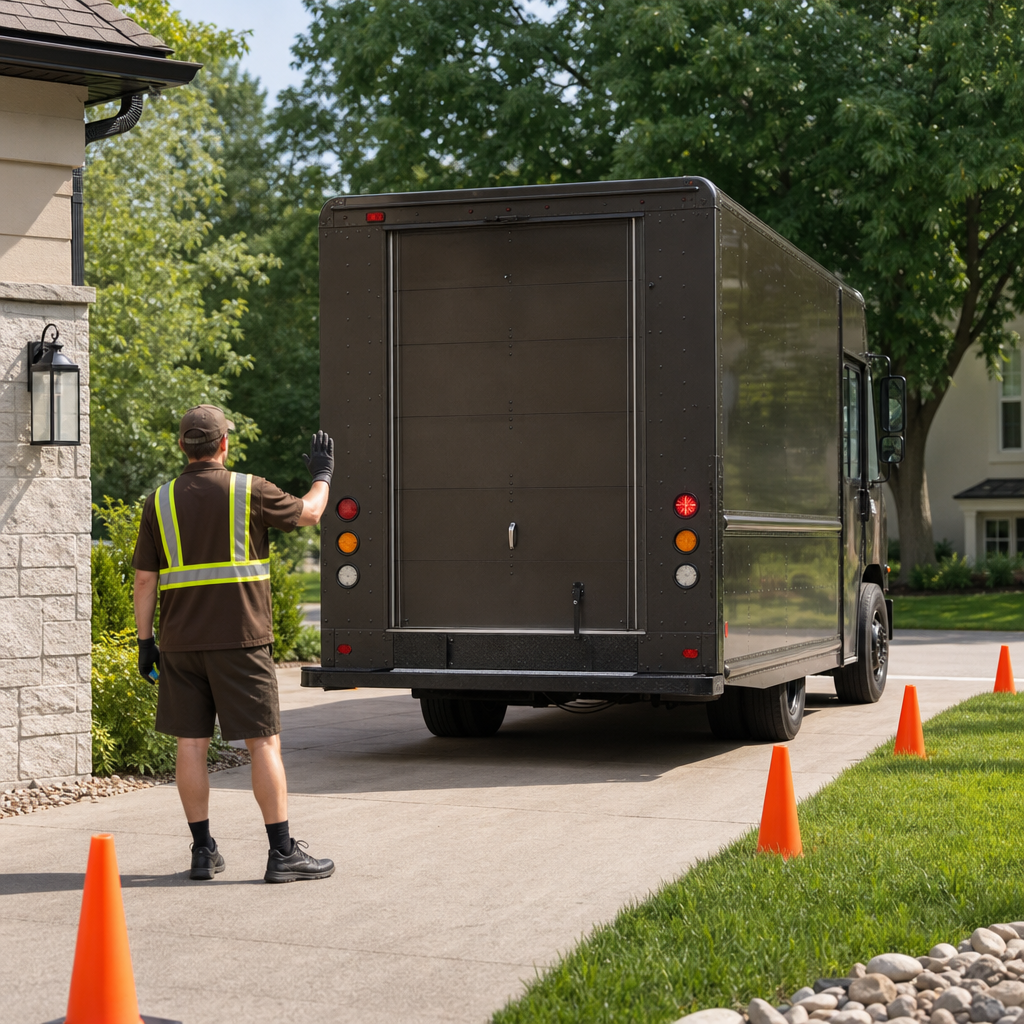
    Unbranded parcel delivery van reversing carefully with a spotter in a residential driveway

    Route safety

    Treat frequent stops and backing as active insurance exposures.

    Local package delivery can mean hundreds of starts, stops, turns, driveway entries, curbside parking events, and pedestrian interactions in one day. The route pattern matters because it explains why a delivery fleet may need a different commercial-auto conversation than a point-to-point carrier.

    • Document backing, driveway, loading-zone, and pedestrian-safety routines
    • Describe route density, stop volume, territory, and any urban or residential concentration accurately
    • Review whether added routes or different vehicle types change the operational picture
    Explore delivery vehicle coverage
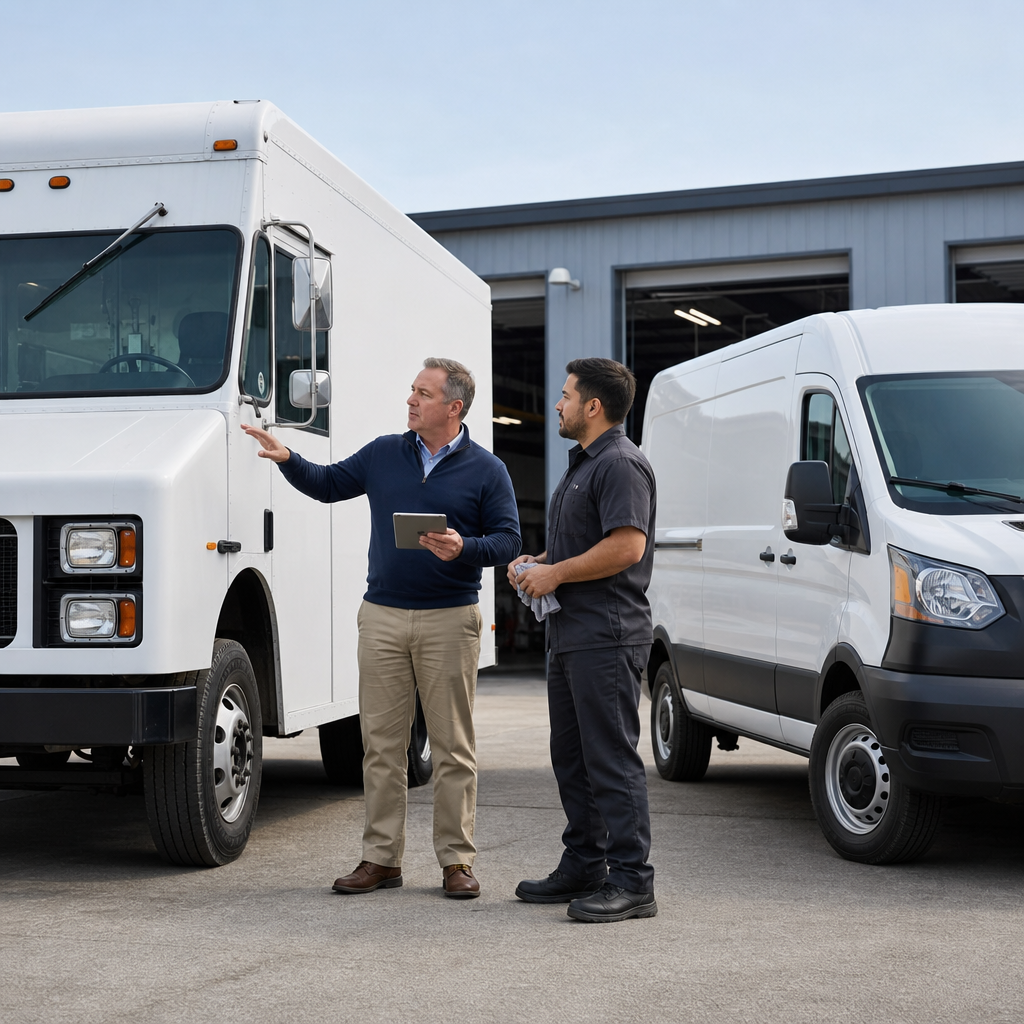
    Unbranded delivery fleet owner and technician inspecting commercial vehicles in a maintenance yard

    Equipment protection

    Keep physical-damage values aligned with the vehicles you operate.

    A vehicle schedule should account for the vans, step vans, tractors, trailers, and upfits actually in service. Ownership, lease, rental, and financing arrangements can affect both the information a contractor supplies and the property interests that need review.

    • Confirm current values, vehicle identification details, and equipment condition
    • Track lender, lessor, lienholder, or loss-payee interests when they apply
    • Review newly acquired, rented, or temporarily substituted units before relying on an old schedule
    Learn about physical damage options
    Unbranded tractor trailer arriving at a distribution terminal while a driver checks the trailer connection

    Terminal transitions

    Make trailer and freight handoffs easy to explain.

    Line-haul work can involve terminal arrivals, trailer connections, dispatch changes, borrowed equipment, and freight transfers. Each handoff is a reason to review what the contractor controls, what is documented, and what the agreement assigns to the business.

    • Identify where responsibility begins and ends for a trailer or freight transfer
    • Keep dispatch, interchange, seal, and condition records organized around each handoff
    • Compare actual trailer use with the policy terms and contractual responsibilities
    Review trailer custody exposure
    Fleet manager reviewing maintenance information beside an unbranded cargo van in a service bay

    Maintenance controls

    Show how the fleet stays road-ready between renewals.

    Maintenance and inspection controls may be an important part of how a contractor describes its operation. They also help a growing business keep its vehicle schedule, out-of-service units, repairs, and replacement decisions connected to reality.

    • Retain inspection, maintenance, repair, and tire-service records
    • Separate active units from vehicles that are sold, parked, or no longer operating
    • Tell the insurance team when a replacement vehicle, upfit, or equipment change affects the schedule
    Explore commercial auto coverage
    Unbranded delivery driver documenting a minor vehicle incident while a supervisor arrives

    Incident records

    Build a clean record when an incident interrupts the route.

    An incident response process can help a contractor preserve the facts that may be needed later. The process should be practical for drivers: make the area safe, notify the appropriate people, and retain the available details without guessing at responsibility or outcome.

    • Use a consistent escalation process for vehicle, cargo, property, and injury events
    • Retain photos, witness details, delivery information, and internal reports where appropriate
    • Share material operating or loss-history changes during a coverage review or renewal conversation
    Visit client support resources
    Delivery fleet manager leading a morning safety briefing with unbranded commercial drivers

    Peak-season capacity

    Plan for added people and equipment before volume changes.

    Seasonal volume can bring new drivers, leased units, borrowed equipment, extra routes, and compressed training schedules. A contractor should be ready to explain these changes before they occur rather than treating peak season as a minor variation on the standard operation.

    • Forecast driver headcount, payroll, route changes, and supplemental equipment
    • Confirm worker-injury coverage questions against the people and states involved
    • Update safety and onboarding routines when temporary staff or unfamiliar routes are introduced
    Review workers’ compensation guidance
    Transportation business owner and insurance advisor reviewing a renewal plan near an unbranded truck fleet

    Renewal planning

    Use renewal as a program review—not only a pricing event.

    A useful renewal conversation connects the prior term to the next one: route changes, equipment changes, drivers, payroll, loss history, safety controls, certificates, and business ownership. Complete records help the business have a more informed conversation about available options.

    • Gather current declarations, loss runs, schedules, payroll, and contract instructions early
    • Identify growth, acquisitions, sales, or territory changes that alter the operating profile
    • Compare limits, deductibles, endorsements, exclusions, and policy terms—not just a price
    Explore fleet insurance options

    Before the insurance review

    Bring the records that show how your operation runs.

    A stronger discussion starts with complete, current details. Truxsurance can help identify gaps in the information, but contract interpretation and final coverage decisions remain subject to the agreement, insurer review, and policy terms.

    Request a contractor review

    Helpful starting documents

    • The current service agreement and insurance article
    • Certificate instructions and any requested endorsement wording
    • Vehicle, trailer, and equipment schedules with ownership details
    • Driver roster, payroll, worker classification, and operating states
    • Current policy declarations and three to five years of loss runs
    • Route territory, freight or package profile, and peak-season plans

    Contractor insurance FAQ

    Questions worth asking before renewal or growth.

    No. Truxsurance is an independent insurance agency. This page is general insurance guidance for independent businesses that contract to perform package-delivery or freight work. It does not represent FedEx or interpret any service agreement.

    Explore related coverage

    Build the review around your operation, not a copied checklist.

    Use these Truxsurance guides to explore the coverage topics that may be relevant to your delivery or freight business.

    Get started
    Truxsurance is an independent insurance agency and is not affiliated with, sponsored by, approved by, or endorsed by FedEx. FedEx and related marks are the property of their respective owners. This page provides general insurance information, not legal advice. Coverage, pricing, terms, eligibility, certificates, and claim outcomes depend on the insurer, state, contract, policy terms, and the facts of each situation.
    Call Now